7 dos and don'ts for organizing a conference
Organizing a conference can be a major challenge. Fortunately, you don't have to reinvent the wheel, as there are many unwritten rules that can help you. Dare to stray from the beaten path and avoid falling into age-old pitfalls. We have listed seven dos and don'ts for you:
Do's
1. When organizing a conference, choose a single target group and tailor the content of the conference to that group. Next, determine the goal of your event. What do you want to achieve by the end of it? Tailor the content and format accordingly. Perhaps your message would come across better in the form of a corporate festival?
2. Send out a save the date well in advance, about three months beforehand. Send out the invitation six weeks before the event. Briefly mention what the conference entails, what you will gain from it, where it will take place, and how to register. Details will follow later.
3. Involve your (potential) guests in the program. This will not only make the content more useful to them, but also make them feel more involved. There are other tricks to minimize no-shows.
4. Communicate in a personal way. For example, invite guests by means of a video instead of an email or letter. And always include a personal salutation in your (digital) mail. Respond quickly to questions and comments from (potential) guests. The better the communication in the preliminary phase, the better the feeling about your event will be.
5. Play the event like a movie in your head. How do you get in, where do you go, what do you need as a visitor? This way, you can tackle most of the gaps in the script in advance. For example, is the routing clear?
6. Record the conference in the highest possible quality, with film and photography. You can do this by livestreaming, for example. With these images, you can much more easily encourage guests to participate in the next edition.
7. Keep in touch with your visitors after the conference. A short survey shows that you want to listen to your visitors, and an aftermovie or photo gallery allows your guests to relive the successful day.
Don'ts
1. Don't plan your conference from 9:30 a.m. to 4:30 p.m., because many visitors will be stuck in traffic. And avoid a standard program of reception, speakers, break, speakers, and drinks. Scientific research shows that it is better to divide a day's program into three or four highlights with breaks in between.
2. Don't overwhelm your (potential) guests with messages about the event. Carefully select your information moments in advance and always make sure your messages contain something new.

3. Don't make guests hang up their coats before registering. Most queues at the desk are caused by printed (e)tickets still being in coat pockets.
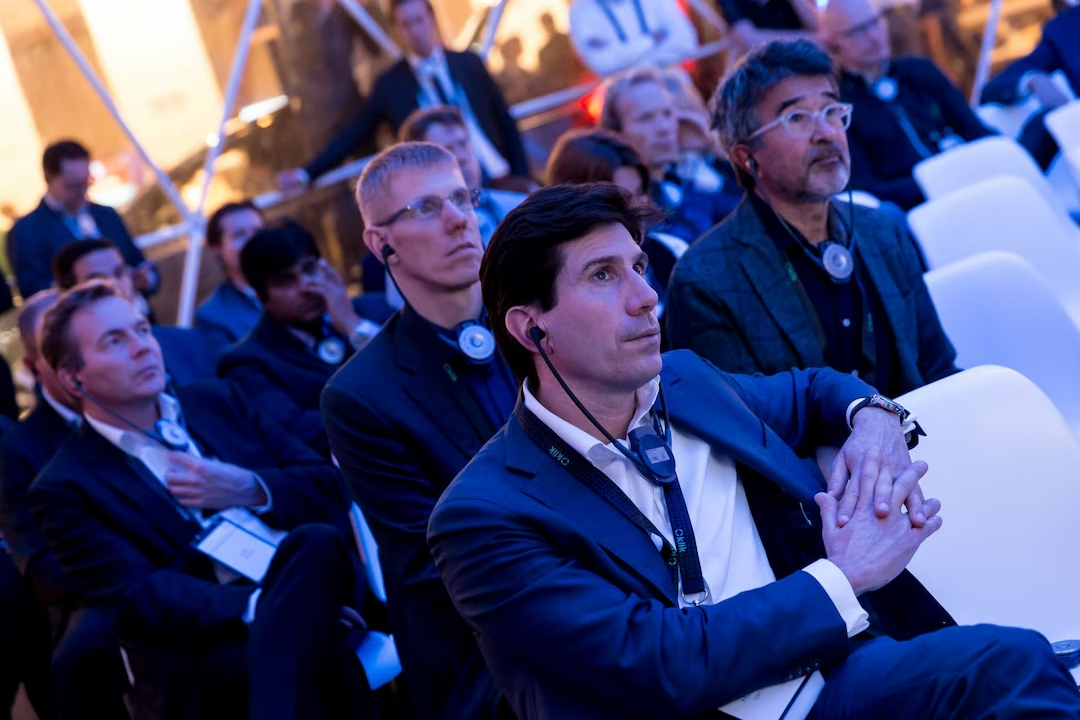
4. Illegible badges are as useful as coffee without a cup. So make sure you have large badges with legible fonts and/or give guests with the same interests badges of the same color.
5. You don't want empty front rows, so arrange for a hostess (or even better: someone from management or the board) to escort guests to the front rows.
6. Don't wait until the day of your event to test your presenter's skills. Nothing is more annoying than a shadow of the best man or woman on your projection screen, a malfunctioning microphone, or a completely written-out PowerPoint presentation in 12-point font.
7. Don't let a networking event turn into a social gathering if you think it's important to make new contacts. There are lots of tools, apps, and simple concepts to help you network.