12 tips to minimize no-shows
The registrations poured in, yet you still see empty seats in the room. No-shows cannot be prevented, but they can be minimized. It not only saves money, but also reduces waste of materials, food, and potential reach of sponsors. With these 12 tips, you can reduce no-shows at your event. The target audience and type of event determine which solution works best!
1. Be personal
The more personal you are in your communication, the more guests will make an effort to attend or cancel if they are unable to come. After all, it is more difficult to disappoint an individual than an impersonal company.
2. Send a reminder
Send regular reminders about your event so that people don't forget. This could be a simple "save the date," but also the announcement of program components, the location, or a behind-the-scenes look.
.avif)
3. Get the target group excited
Get your target audience excited about the event to increase the number of participants, but also to ensure that those who have registered don't want to miss out.
4. Create a cliffhanger
Announce that something will be revealed or that a (world-renowned) speaker will be present at your event. Of course, everyone will want to be there!
5. Discuss the effects of no-shows.
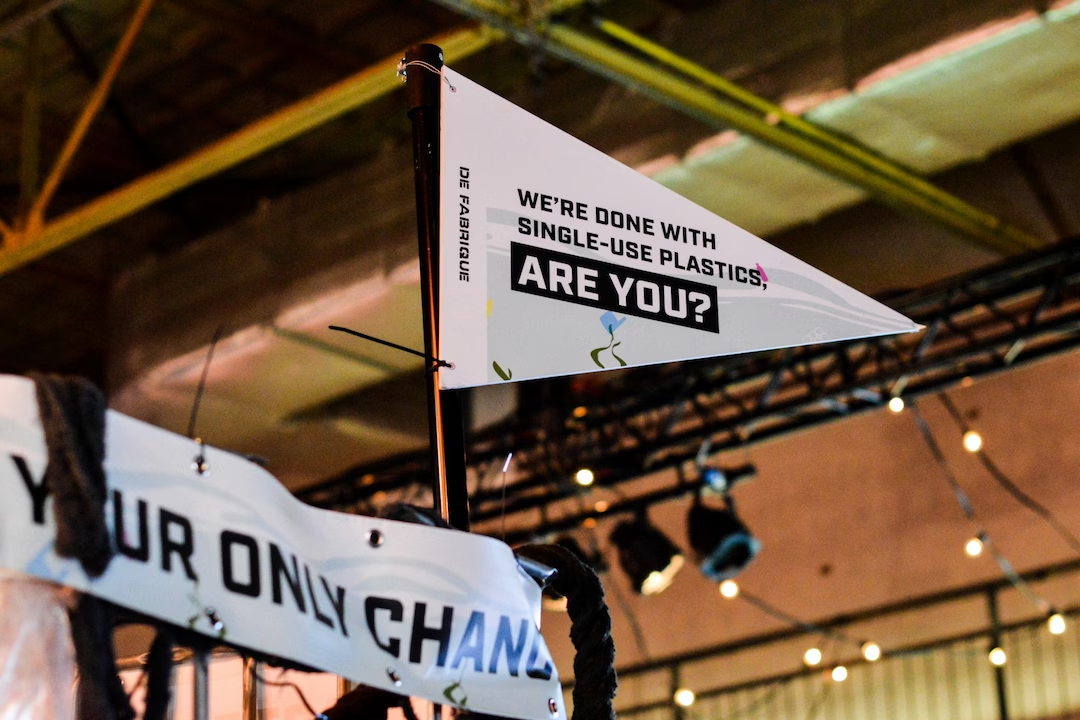
Inform guests about the effects of no-shows. Consider, for example, food waste and excessive use of single-use plastics. Read about what DeFabrique is doing to do business for future generations >
6. Unsubscribing should be easy
Make it easy for guests to cancel. Chances are they won't cancel their registration if it takes too much effort, which means you'll end up with no-shows.
7. Work with ticket sales
Charge a (small) admission fee. At free events, the number of guests who don't show up is between 10 and 30%, while at paid events it's between 5 and 10%. So significantly lower! People are more likely to think carefully about whether they actually want or can attend, and they also tend to make more of an effort to cancel on time. You can charge guests who don't show up a 'fine' or refund the admission fee if they actually attend. Or you can give visitors a gift that is worth at least as much as the admission fee.
8. Ensure social responsibility
The system Meetup.com , for example, works with waiting lists; when people cancel, other people can take their place.
9. Encourage networking in advance
Social media allows you to connect participants and encourage them to meet up in person. It also creates visibility for guests, making them less likely to not show up.
10. Send a text message
Send a text message as confirmation and reminder. This way, you will get more attention than with an email.
11. Get help
Ask the venue if they are willing to help you come up with a Plan B. For example, moving to a smaller space or purchasing less food and beverages in advance. Scaling up can often be done at the last minute, but canceling cannot.
12. Record no-show ratio
Keep track of the no-show rate and learn from it. Gradually, you will build up more knowledge about the no-show rate of your target group and what methods help to minimize no-shows.