What NIMA Teaches You About the Logistics of a Major Event
On June 11, the NIMA Marketing Day took place at DeFabrique for the tenth year in a row. It was a large-scale event, with 1,500 guests spread across ten breakout rooms, where they learned about the ins and outs of the marketing profession. How do we at DeFabrique ensure that there are no bottlenecks, that everyone knows where to go, and that everyone goes home feeling good? Let us take you through it.
Plan for peaks
Logistical planning begins kilometers away: with the signage leading to the parking lot. We make sure there are enough spaces, but also that they’re easy to find with signs. Even if guests have followed their GPS and find themselves in front of a full parking lot, we can easily redirect them to a nearby parking spot.
We also take people who use public transportation into account—earlier than you might think. That’s because plenary sessions often start at nine o’clock. Our shuttle service knows the train schedules by heart. As soon as the train in question pulls in, several large buses are standing by to immediately relieve the crowd.
The Herd Unherds Itself
Something you don’t need to tell a marketer: people are herd animals. But they go along with it themselves, too: as soon as they walk in, everyone immediately heads for the first coffee machine they see. You’ll want to avoid this bottleneck if possible. That’s why at DeFabrique, we set up coffee corners in several logical spots throughout the venue and actively direct our staff to guide guests there. These coffee corners aren’t fixed and can be placed in different locations for each event. This way, we always ensure that the coffee route is a logical path to follow.
We also know that there’s a surge in requests for drinks after the sessions. That’s why our staff communicate with each other. Is the session coming to an end? Then we make sure coffee and tea are already ready to go. That way, the crowd can head straight out of the room without having to wait for a machine to finish brewing.


From front to back, from left to right
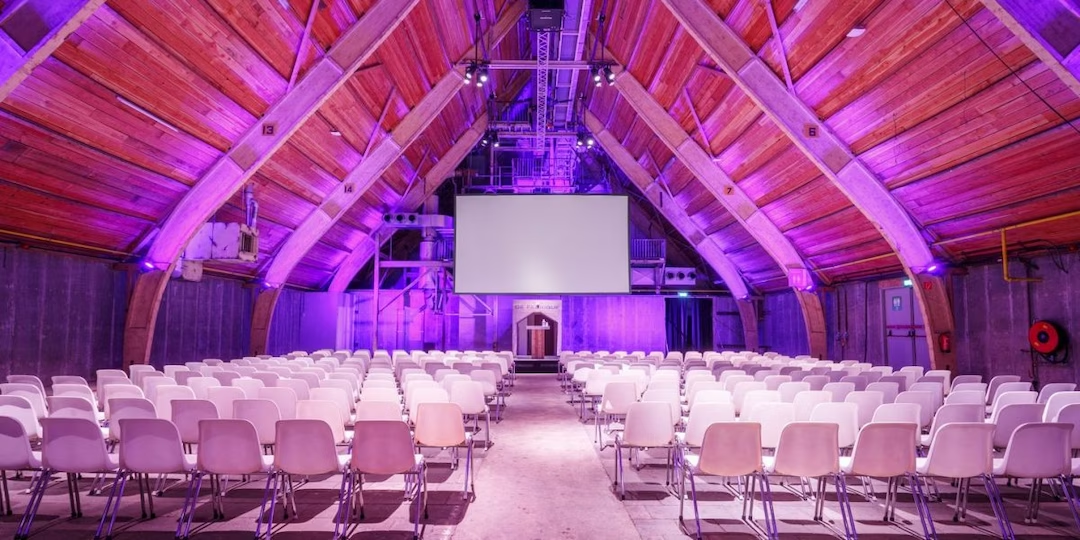
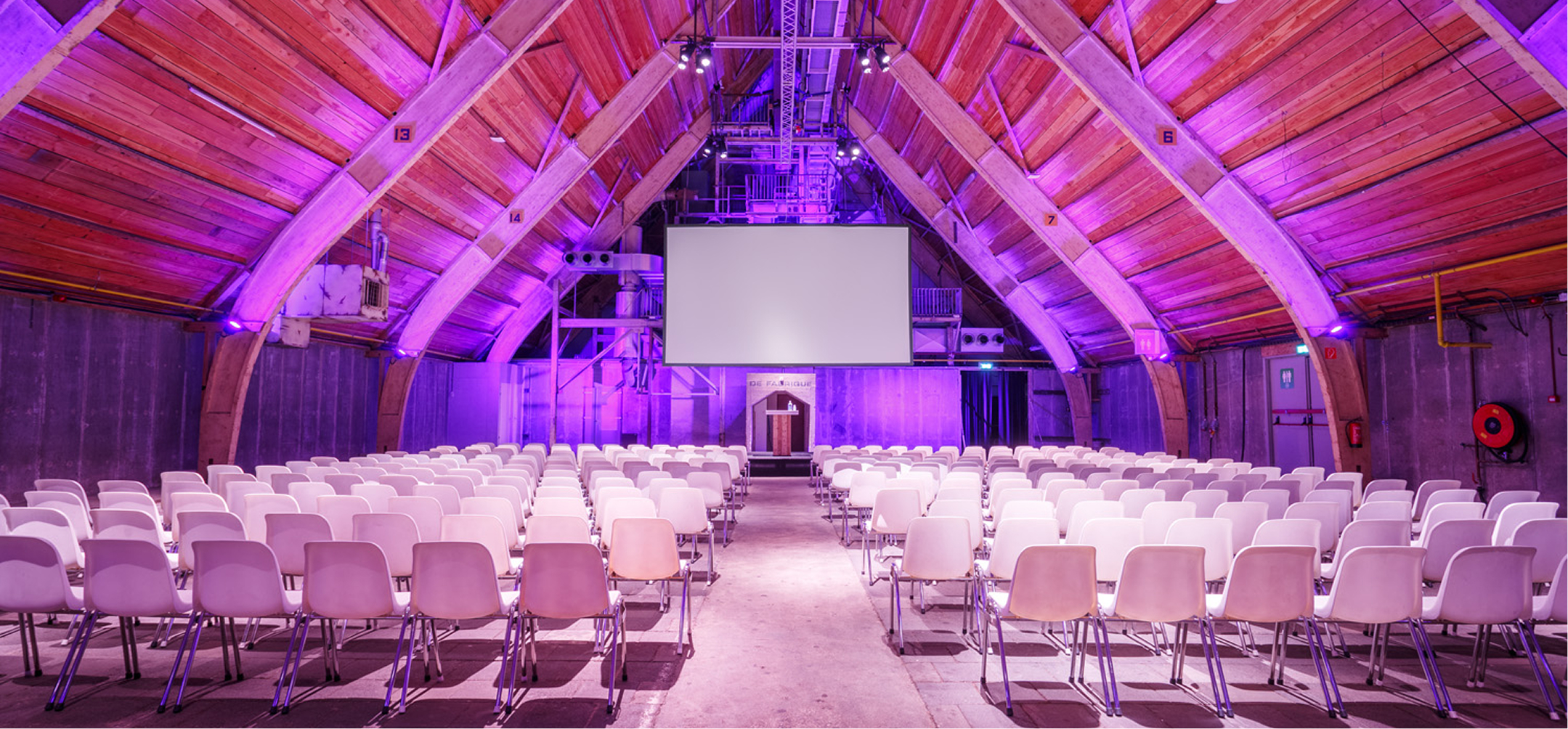
At an event like NIMA Marketing Day, we always deliberately fill the plenary hall—which holds about 1,500 seats—from front to back. Guests naturally tend to linger in the back, but that blocks access for latecomers. By filling the front rows first, the back section remains clear for people who arrive a little later. This allows the speaker to start on time without interruption, and without people having to climb over rows of seats.
Avoid the funnel by using smart routes
When 1,500 people move from the catering halls to the smaller rooms, a bottleneck can occur. We’d rather avoid that. That’s why, when the weather is nice, we open the large roll-up doors and direct the flow of guests outside via the small plazas. This relieves congestion in the indoor hallways and gives guests a breath of fresh air right away. Even when the weather doesn’t permit it, we ensure a smooth flow by designating specific entrances and exits for each hall. This creates one-way traffic, allowing everyone to move calmly from hall to hall.
For very large groups, we recommend using colored pathways. For example, a pink pathway could serve as the “main route” to all catering stations and the plenary hall, while blue or red routes could lead to specific blocks of breakout rooms.
Sometimes a breakout session is so popular that a room fills up. Our expertise, therefore, includes knowing when to say “no.” We closely monitor the crowd levels in popular rooms. As soon as capacity is reached, we station staff at the bottom of the stairs to immediately direct guests to rooms that still have space. This way, we ensure safety and keep emergency exits clear without causing chaos.
A large-scale event with 1,000 or more guests is only a success if the guests don’t notice how hard we’re working behind the scenes to keep everything running smoothly. Whether it’s scaling up to 15 coat check attendants when it rains or managing the entrances and exits of side rooms, we work with you as a logistics partner.